The SANSI 350W-Eq. Grow Light Bulb, 32W is our top pick among the best grow light bulbs for indoor plants for most people: at 1 foot it delivers enough light for sun-loving citrus and succulents. Pick the Sylvania PAR38 for a published PPF, or the Philips for a natural white light in living spaces.
The short answer
- For the most light from one bulb, the SANSI 350W-Eq. Grow Light Bulb, 32W is the pick: a published 423 micromoles per square meter per second at 1 foot, a ceramic heat sink and a 5-year warranty (maker).
- For a published photon output from a major brand, the Sylvania Full Cycle 20W PAR38 lists 30 micromoles per second and 80 CRI (maker).
- For a living room, the Philips LED Plant Grow Light PAR38 gives plain 5000K daylight with no pink glow and a 50 degree beam (maker).
- Most foliage houseplants need a daily light integral of only 3 to 6 moles per square meter, Iowa State Extension says, so even small bulbs help.
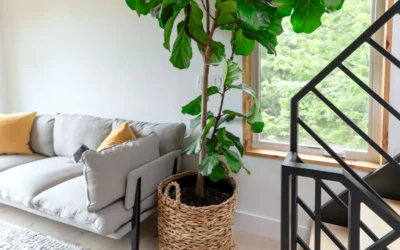
By November the fiddle leaf in the corner starts dropping leaves and the herbs on the sill stretch toward a window that gets four weak hours of sun. You do not need a grow tent to fix that. A grow light bulb screws into the lamp or clamp light you already own and gives plants the light the season took away.
Plants measure light in photons, not lumens. Virginia Tech Extension explains that the useful numbers are PPFD, the photons landing on a square meter each second, and DLI, the total a plant gets in a day. Full sun is close to 2,000 micromoles per square meter per second; a foliage houseplant gets by on a tiny share of that.
We compared published PPFD or PPF, watts, color temperature, beam angle, bulb shape, damp or water rating and owner feedback for grow light bulbs for indoor plants in stock for delivery to New York in November 2026. We picked 6 grow light bulbs for indoor plants, from a high-output A21 to a 9 watt flood. For other setups, see our grow lights for succulents and grow lights for seedlings.
We research and compare products, and we may earn a commission when you buy through links in this guide. As an Amazon Associate I earn from qualifying purchases.
Our Top Picks
 Best OverallSANSI 350W-Eq. Grow Light Bulb, 32WA published PPFD of 423 at 1 foot, 4000K full spectrum, ceramic heat sink and 5-year warranty (maker).Jump to review
 Best Published PPFSylvania Full Cycle 20W LED Grow Light Bulb, PAR3830 micromoles per second, 80 CRI, a 400 to 730 nm spectrum and a damp rating (maker).Jump to review
 Best for Living RoomsPhilips LED Plant Grow Light Bulb PAR381325 lumens of 5000K daylight, a 50 degree beam, no UV and no mercury (maker).Jump to review
 Best Wide BeamSANSI 250W Equiv. Full Spectrum LED Grow Bulb, BR303000K and 5000K white plus 660 and 730 nm red, a 120 degree beam and IP54 rating (maker).Jump to review
 Best for Table LampsGE Grow LED Light Bulb, A19, 2 PackA standard A19 shape with a published PPF of 16 micromoles per second (maker).Jump to review
 Best Low WattageFeit Electric BR30 LED Grow Light Bulb, 9WA 9 watt flood tuned to 448 nm blue and 630 nm red, rated for high humidity (maker).Jump to review
Picks Matched to Your USDA Zone
Your winter light outdoors decides how much a window gives your plants. Find your zone on the USDA Plant Hardiness Zone Map.
| Your climate | USDA zones | Our pick | Why it fits |
|---|---|---|---|
| Long, dark northern winters | 3 to 5 | SANSI 350W-Eq. Grow Light Bulb, 32W | The most light per bulb to replace weak window sun. |
| Cloudy winters, Pacific Northwest and Great Lakes | 5 to 8 | Sylvania Full Cycle 20W LED Grow Light Bulb, PAR38 | A known 30 micromole output to plan around. |
| Sunny winters, supplementing a window | 8 to 10 | Philips LED Plant Grow Light Bulb PAR38 | A white daylight boost that blends with room light. |
| Humid bathrooms and plant shelves | All | SANSI 250W Equiv. Full Spectrum LED Grow Bulb, BR30 | IP54 rating and a wide 120 degree beam. |
Indoor light depends more on your windows than your zone: a north window in Florida can be dimmer than a south window in Minnesota.
How Much Light Each Bulb Delivers
We turned the makers’ published numbers into daily light integral (DLI), the total light a plant gets in a day, using the Virginia Tech Extension method: PPFD times seconds of light, divided by 1,000,000. SANSI publishes PPFD at 1 foot. Sylvania and GE publish total output (PPF), so we spread it over a 2 by 2 foot area as a best case.
| Bulb | Light at the plant | DLI at 12 hours | DLI at 16 hours |
|---|---|---|---|
| SANSI 32W at 1 ft | 423 PPFD | About 18.3 | About 24.4 |
| SANSI 24W BR30 at 1 ft | 122 PPFD | About 5.3 | About 7.0 |
| Sylvania PAR38 over 2 x 2 ft | About 81 PPFD | About 3.5 | About 4.6 |
| GE A19, one bulb, over 2 x 2 ft | About 43 PPFD | About 1.9 | About 2.5 |
Compare that with the targets. Iowa State Extension puts foliage houseplants at 3 to 6 moles a day and flowering houseplants at higher levels, and UNH Extension lists 4 to 6 for houseplants and 14 to 20 for full-sun plants. The 32W SANSI at 1 foot reaches the full-sun range in 12 hours, enough for citrus or succulents and more than a pothos needs, so raise it or shorten the timer. One Sylvania or a pair of GE bulbs covers low-light foliage plants at 16 hours.
Light falls off fast with distance, so these numbers apply only at the stated spacing. UMaine Extension warns that plants too close to a light grow short leaf stems and crinkled, leathery leaves.
What Grow Light Bulbs Cost to Run
UMaine Extension says 16 to 18 hours of artificial light a day is best for most plants, so we priced 16 hours a day at the U.S. Energy Information Administration average residential rate of 18.16 cents per kilowatt-hour for August 2026.
| Bulb | Watts | kWh per day at 16 h | Cost per day | Cost per year |
|---|---|---|---|---|
| SANSI 32W | 32 | 0.51 | About 9 cents | About 34 dollars |
| SANSI 24W BR30 | 24 | 0.38 | About 7 cents | About 25 dollars |
| Sylvania PAR38 | 20 | 0.32 | About 6 cents | About 21 dollars |
| Philips PAR38 | 15.5 | 0.25 | About 4.5 cents | About 16 dollars |
| Feit BR30 | 9 | 0.14 | About 2.6 cents | About 9.5 dollars |
Even the brightest bulb here costs less to run for a year than a single large houseplant. Use a plug-in timer so the light runs the same hours every day; foliage plants usually do fine with 12 hours.
Grow Light Bulbs for Indoor Plants: Our Picks in Detail
Best Overall
1. SANSI 350W-Eq. Grow Light Bulb, 32W

As an Amazon Associate we earn from qualifying purchases.
What We Like
- Published PPFD of 423 at 1 ft (maker)
- Ceramic chip-on-ceramic heat sink (maker)
- ETL listed, 5-year warranty (maker)
- 4000K full spectrum looks white, not pink
What We Don’t Like
- Some report failures within two years
SANSI’s 32 watt A21 is the most powerful screw-in bulb here, and it is the only one that publishes the PPFD you get at a set distance. Many call it good value.
At 1 foot it is strong enough for high-light plants; move it to 2 feet for foliage plants.
Skip it if: you only need a gentle boost for low-light foliage.
Climate fit: All zones; best for citrus, succulents, herbs.
| Power | 32 W |
|---|---|
| Output | PPFD 423 at 1 ft (maker) |
| Shape | A21, E26 |
| Color | 4000K full spectrum |
| Listing | ETL (maker) |
| Warranty | 5 years (maker) |
Best Published PPF
2. Sylvania Full Cycle 20W LED Grow Light Bulb, PAR38

As an Amazon Associate we earn from qualifying purchases.
What We Like
- Published PPF of 30 micromoles per second (maker)
- 80 CRI, so plants look natural
- 400 to 730 nm spectrum (maker)
- Damp rated, 3-year warranty (maker)
What We Don’t Like
- Non-dimmable
Sylvania, now sold under LEDVANCE, prints the photon output right in the product name: 30 micromoles per second from 20 watts, which works out to 1.5 micromoles per joule. That makes it the easiest bulb here to plan a light dose around, and the 80 CRI keeps leaves looking green rather than purple.
It is a frosted PAR38 flood with a 15,000 hour rated life and a damp rating for humid plant corners (maker).
Skip it if: you need a dimmable bulb.
Climate fit: All zones; foliage plants and herbs.
| Power | 20 W |
|---|---|
| Output | PPF 30 (maker) |
| Shape | PAR38, frosted, E26 |
| CRI | 80 |
| Life | 15,000 hr (maker) |
| Warranty | 3 years (maker) |
Best for Living Rooms
3. Philips LED Plant Grow Light Bulb PAR38

As an Amazon Associate we earn from qualifying purchases.
What We Like
- 1325 lumens of 5000K daylight (maker)
- 50 degree beam lights a whole plant (maker)
- No UV and mercury free (maker)
- Up to 25,000 hours at 3 hours a day (maker)
What We Don’t Like
- Not compatible with Philips Hue
Philips made this PAR38 for rooms where you live, not just grow: the light is ordinary 5000K daylight with no pink cast.
Philips does not publish PPF, so treat it as a supplement for plants near a window.
Skip it if: you need high light for fruiting plants.
Climate fit: All zones; living rooms and offices.
| Power | 15.5 W |
|---|---|
| Output | 1325 lm (maker) |
| Shape | PAR38, E26 |
| Color | 5000K daylight |
| Beam | 50 degree (maker) |
| Mercury | Mercury free (maker) |
Best Wide Beam
4. SANSI 250W Equiv. Full Spectrum LED Grow Bulb, BR30

As an Amazon Associate we earn from qualifying purchases.
What We Like
- 3000K and 5000K white plus 660 and 730 nm red (maker)
- 120 degree beam covers several pots
- IP54 water resistance (maker)
What We Don’t Like
- Some owners see flicker
- Lower PPFD at 1 ft than the 32W SANSI
The BR30 SANSI trades peak intensity for spread: a 120 degree beam lights a shelf of pots evenly, and the added 660 and 730 nm red is aimed at flowering plants (maker).
At a published 122 PPFD at 1 foot it suits foliage and moderate-light plants; the IP54 rating means watering splashes are not a worry.
Skip it if: you are sensitive to flicker.
Climate fit: All zones; plant shelves and bathrooms.
| Power | 24 W |
|---|---|
| Output | PPFD 122 at 1 ft (maker) |
| Shape | BR30, E26 |
| Spectrum | 3000K, 5000K, 660 nm, 730 nm |
| Beam | 120 degree |
| Rating | IP54 (maker) |
Best for Table Lamps
5. GE Grow LED Light Bulb, A19, 2 Pack

As an Amazon Associate we earn from qualifying purchases.
What We Like
- Standard A19 shape fits lamps
- Published PPF of 16 micromoles per second (maker)
- Two bulbs per pack
- Up to 25,000 hours (maker)
What We Don’t Like
- PPF of 16 per bulb is low for sun-loving plants
GE’s A19 grow bulb is the one to screw into an ordinary table or floor lamp next to a plant. GE publishes a PPF of 16 per bulb and suggests 9 inches from the plant for 18 hours a day (maker).
The balanced spectrum still reads slightly pink to some owners, so it is better in a plant corner than over a reading chair.
Skip it if: you want a pure white light.
Climate fit: All zones; small plants and herbs.
| Shape | A19, E26 |
|---|---|
| Output | PPF 16 per bulb (maker) |
| Pack | 2 bulbs |
| Spacing | 9 in, 18 h a day (maker) |
| Life | 25,000 hr (maker) |
| Brand | GE |
Best Low Wattage
6. Feit Electric BR30 LED Grow Light Bulb, 9W

As an Amazon Associate we earn from qualifying purchases.
What We Like
- Only 9 watts (maker)
- Tuned to 448 nm blue and 630 nm red (maker)
- Rated for high humidity use
- UL listed, 25,000 hour rating (maker)
What We Don’t Like
- No published PPF or PPFD
- Smallest output here
Feit’s 9 watt BR30 is the low-power choice for a single plant or a seed tray in a humid spot. Feit says it puts more light in the 448 nm blue and 630 nm red bands plants use, and it replaces a 65 watt incandescent flood (maker).
Without published photon numbers, use it as a supplement for low-light foliage rather than a sole light source.
Skip it if: you grow high-light plants.
Climate fit: All zones; low-light foliage.
| Power | 9 W |
|---|---|
| Shape | BR30, E26 |
| Spectrum | 448 nm and 630 nm peaks (maker) |
| Rating | High humidity |
| Listing | UL (maker) |
| Life | 25,000 hr (maker) |
Specs at a Glance
| Model | Power | Output | Shape | Standout |
|---|---|---|---|---|
| SANSI 32W A21Best Overall | 32 W | PPFD 423 at 1 ft | A21, 4000K | 5 yr warranty |
| Sylvania Full Cycle PAR38Best Published PPF | 20 W | PPF 30 | PAR38, frosted | Damp rated |
| Philips PAR38 5000KBest for Living Rooms | 15.5 W | 1325 lm | PAR38, 5000K | No UV |
| SANSI 24W BR30Best Wide Beam | 24 W | PPFD 122 at 1 ft | BR30, 120 degree | IP54 |
| GE Grow A19 2 PackBest for Table Lamps | A19 | PPF 16 | A19, 2 pack | 25,000 hr life |
| Feit BR30 9WBest Low Wattage | 9 W | Not listed | BR30 | Humidity rated |
Which Should You Buy?
For the most light per bulb
Get the SANSI 32W A21.
To plan by photon output
The Sylvania Full Cycle PAR38.
For a natural look in living spaces
The Philips PAR38 5000K.
For a shelf of pots
The SANSI 24W BR30.
For an ordinary table lamp
The GE Grow A19 2 Pack.
For one low-light plant
The Feit BR30 9W.
Match the Bulb to Your Fixture
Every bulb here has a standard E26 medium screw base, but shape decides where it fits.
- PAR38 and BR30 floods (Sylvania, Philips, SANSI 24W, Feit) suit clamp lights, track heads and recessed cans aimed down at plants.
- A19 and A21 (GE, SANSI 32W) fit table and floor lamps; the A21 is longer, so check the shade.
- Humid spots: Sylvania and Feit are rated for damp or high-humidity use and the SANSI 24W is IP54 (maker).
- Dimmers and smart systems: the Sylvania is non-dimmable and the Philips does not work with Philips Hue (maker).
- Heat: owners of the SANSI 32W split on how hot it runs, so keep it out of enclosed glass shades.
Point floods straight down from 1 to 2 feet above the leaves and turn the pot weekly so every side gets light.
How to Choose the Best Grow Light Bulbs for Indoor Plants
Published output
PPFD at a distance or PPF beats watts and lumens for plants.
Light target
Foliage plants need 3 to 6 moles a day; sun lovers far more.
Shape
Floods for clamp lights and cans, A19 or A21 for lamps.
Color
4000K to 5000K white is easier to live with than pink.
Rating
Damp, humidity or IP54 rating for bathrooms and misted plants.
How This Guide Was Made
We do not run a test garden. We compared published PPFD or PPF, watts, color temperature, beam angle, shape, damp or water rating and patterns in owner feedback for grow light bulbs for indoor plants in stock for delivery to New York in November 2026, using maker claims marked (maker).
We relied on Iowa State, UNH, UMaine and Virginia Tech Extension guidance on light for indoor plants and U.S. Energy Information Administration electricity prices, and did our own DLI and running cost math. We picked 6 grow light bulbs for indoor plants for different fixtures and plants.
Why Trust Garden Guide US
We compare garden gear for American yards using manufacturer specifications, product manuals, warranty terms, cooperative extension guidance and patterns in owner feedback. We do not run a test garden, and every claim comes from a maker, a manual, an extension service or owner feedback. Every guide notes which USDA zones and conditions each pick suits. Read how we review.
Our Verdict
For most people, the SANSI 350W-Eq. Grow Light Bulb, 32W is the grow light bulb for indoor plants to buy. It publishes its light at 1 foot and delivers enough for sun-loving plants from a standard socket.
Choose the Sylvania to plan by photon output, the Philips for living rooms, and set any bulb on a timer for 12 to 16 hours a day.
Grow Light Bulbs for Indoor Plants FAQs
Do grow light bulbs work in regular lamps?
Yes. All six have standard E26 bases; A19 and A21 bulbs fit table lamps, and PAR38 or BR30 floods suit clamp lights and cans.
How far should a grow light bulb be from a plant?
About 1 to 2 feet for most bulbs. GE suggests 9 inches for its A19 (maker); UMaine notes crinkled, leathery leaves mean the light is too close.
How many hours a day should a grow light be on?
12 to 16 hours. UMaine Extension says 16 to 18 hours is best for most plants; foliage plants usually do fine with 12.
How much light do houseplants need?
About 3 to 6 moles per square meter a day for foliage plants, per Iowa State Extension; UNH lists 14 to 20 for full-sun plants.
Are white grow light bulbs as good as purple ones?
For houseplants, yes. White full-spectrum bulbs like the SANSI and Sylvania include the red and blue plants use and are easier to live with.
How much does a grow light bulb cost to run?
A few cents a day. A 20 watt bulb on for 16 hours uses 0.32 kWh, about 6 cents at the August 2026 U.S. average rate.
Sources and Further Reading
- Important Considerations for Providing Supplemental Light to Indoor Plants: Iowa State University Extension and Outreach
- Optimizing Plant Growth with Indoor Lighting Q&A: University of New Hampshire Extension
- Growing Houseplants Under Artificial Lights in Maine, Bulletin 2614: University of Maine Cooperative Extension
- Calculating and Using Daily Light Integral (DLI): Virginia Cooperative Extension
- Average Price of Electricity by State, Table 5.6.A: U.S. Energy Information Administration
- Starting Seeds Indoors: University of Maryland Extension