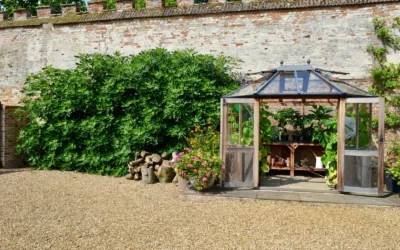
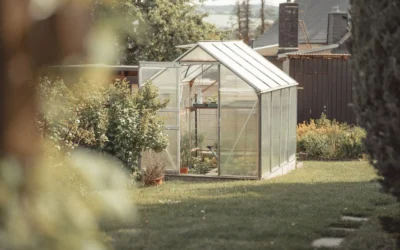
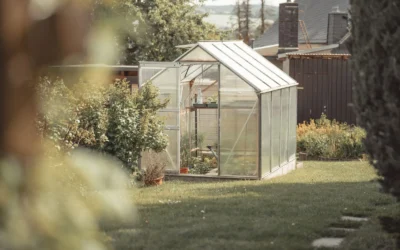
The HOWE 10x12x8.4 FT Polycarbonate Greenhouse is our top pick among the best greenhouse kits for high winds for most backyards: it is rated for 70 mph winds and 30 psf of snow (maker) and ships with expansion screws and ground anchors.
The short answer
- For most windy yards, the HOWE 10x12x8.4 FT kit has the best published numbers here for the money: a 70 mph wind rating and a 30 psf snow load (maker), with ground anchors included.
- If you live on open plains or near the coast, the cedar Backyard Discovery Poppy carries the highest rating, 100 mph, when anchored as its manual specifies.
- Wind pressure rises with the square of speed: a 70 mph gust pushes about 1.6 times as hard as a 56 mph gust.
- No rating counts unless the base is anchored. Budget for anchors or a concrete footing before you buy.
The forecast says gusts to 50 tonight, and you are out in the yard at dusk checking the greenhouse door latch for the third time. Last spring a neighbor’s bargain kit ended up in two backyards. A greenhouse for a windy site is not about thicker plastic. It is a frame rated for a real wind speed, bolted to something that will not move.
Most greenhouse kits on Amazon say “windproof” or “heavy duty” and stop there. A few makers publish an actual wind rating in miles per hour and a snow load in pounds per square foot, and those numbers are the only fair way to compare kits for a windy site.
University of Vermont Extension, writing about high tunnels in extreme weather, notes that end walls are often the weak point and must be anchored to resist uplift. The same rule applies to a backyard kit: the frame rating only holds if the base cannot lift.
We compared published wind ratings, snow loads, panel thickness, frame design, anchoring method and size for greenhouse kits sold on Amazon in the United States. We picked 6 options: five greenhouse kits with a stated wind rating from 56 to 100 mph, plus an anchor kit to tie down any of them. For cold-climate kits, see our guide to greenhouses for winter, and for panel choices our polycarbonate greenhouses guide. Every greenhouse guide we publish is collected in the greenhouse and raised bed guides hub.
We research and compare products, and we may earn a commission when you buy through links in this guide. As an Amazon Associate I earn from qualifying purchases.
Quick Picks at a Glance
 Best OverallHOWE 10x12x8.4 FT Polycarbonate GreenhouseRated for 70 mph winds and 30 psf of snow (maker), with 6 mm panels, triangular frame brackets and ground anchors in the box.Jump to review
 Highest Wind RatingBackyard Discovery Poppy Cedar GreenhouseA cedar kit rated for 100 mph winds and 30 inches of snow when anchored per the manual, with a 5-year warranty (maker).Jump to review
 Best Long LayoutHOWE 8x16x7.5 FT Polycarbonate GreenhouseA 16 foot kit rated for 60 mph winds and 20 psf of snow (maker), with 4 vents and corner drain pipes for rain barrels.Jump to review
 Best for Tall PlantsCDCASA 12x10x10 FT Polycarbonate GreenhouseA 10 foot tall kit rated for 56 mph and 20 psf (maker), with base feet you can bury in soil or set in concrete.Jump to review
 Best CompactHOWE 8x8x7.5 FT Polycarbonate GreenhouseAn 8 by 8 foot kit with 6 mm panels, rated for 56 mph winds and 15.4 psf of snow (maker).Jump to review
 Best Add-On Anchorshannger 18 in Ground Anchor KitFour 18 inch screw-in anchors, 50 feet of 1/8 inch galvanized cable and 2 turnbuckles to tie down a kit that ships without anchors.Jump to review
Best Picks by Climate Zone
Wind exposure matters as much as your hardiness zone. Find your zone on the USDA Plant Hardiness Zone Map, then think about what stands between your yard and the prevailing wind.
| Your climate | USDA zones | Our pick | Why it fits |
|---|---|---|---|
| Open plains and prairie | 3 to 6 | Backyard Discovery Poppy Cedar Greenhouse | Few trees or buildings break the wind. The 100 mph rating, anchored per the manual, gives the most margin. |
| Snowy North and mountains | 3 to 5 | HOWE 10x12x8.4 FT Polycarbonate Greenhouse | Strong winter wind and heavy snow together. The 30 psf snow rating is the highest psf figure here. |
| Gusty suburbs and hilltops | 6 to 8 | HOWE 8x8x7.5 FT Polycarbonate Greenhouse | A compact footprint catches less wind. Add the anchor kit and set it beside a fence or hedge, not in the open. |
| Coastal and Gulf storm areas | 8 to 10 | Backyard Discovery Poppy Cedar Greenhouse | No hobby kit here is built for hurricane-force winds of 74 mph and up except the Poppy, and only when anchored as specified. Remove shade cloth and close vents before storms. |
Hurricane-force wind starts at 74 mph. If your area sees named storms, treat any greenhouse rated under that as a structure to brace, empty and close before every storm.
What a Wind Rating Means in Pounds
Wind pressure grows with the square of wind speed, so a few extra mph on a rating matter more than they look. The basic velocity pressure formula from U.S. building standards (0.00256 times speed squared, before height and shape factors) gives a rough push on an 8 by 7 foot end wall, about 56 square feet.
| Wind speed | Basic pressure | Push on an 8 by 7 ft wall | Picks rated at this speed |
|---|---|---|---|
| 40 mph | 4.1 psf | About 230 lb | All 5 greenhouse kits |
| 56 mph | 8.0 psf | About 450 lb | CDCASA 12x10x10, HOWE 8×8 |
| 60 mph | 9.2 psf | About 516 lb | HOWE 8×16 |
| 70 mph | 12.5 psf | About 702 lb | HOWE 10×12 |
| 100 mph | 25.6 psf | About 1,434 lb | Backyard Discovery Poppy, anchored |
Going from 56 to 70 mph raises the pressure by about 56 percent, and 100 mph is more than three times the load of 56 mph. These are rough figures to compare kits, not an engineering check for your site. Wind on the far side of the greenhouse also pulls outward, which is why uplift, not crushing, is the usual way a kit fails.
Snow Load Ratings, Translated Into Inches
Snow load ratings are in pounds per square foot (psf). One inch of water spread over a square foot weighs about 5.2 pounds, so we converted each rating into inches of water, then into inches of snow using the National Weather Service rule of thumb of 10 inches of snow per inch of water. The NWS notes that ratios closer to 12 to 1 are typical in the Upper Midwest, and that wet snow near freezing has a lower ratio.
| Snow rating | Inches of water | Fluffy snow at 10:1 | Dry snow at 12:1 | Picks |
|---|---|---|---|---|
| 15.4 psf | 3.0 in | About 30 in | About 36 in | HOWE 8×8 |
| 20 psf | 3.8 in | About 38 in | About 46 in | HOWE 8×16, CDCASA 12x10x10 |
| 30 psf | 5.8 in | About 58 in | About 69 in | HOWE 10×12 |
Backyard Discovery states the Poppy holds up to 4,200 pounds, or 30 inches of snow, when anchored per its manual. Wet, heavy snow reaches these weights in far fewer inches, so brush the roof after every storm instead of waiting for a big total.
The Best Greenhouse Kits for High Winds, Reviewed
Best Overall
1. HOWE 10x12x8.4 FT Polycarbonate Greenhouse

As an Amazon Associate we earn from qualifying purchases.
What We Like
- 70 mph wind and 30 psf snow ratings (maker)
- 6 mm polycarbonate with 90 percent light transmission (maker)
- Reinforcements and triangular brackets in the frame
- Expansion screws and ground anchors included
What We Don’t Like
- Warranty terms not listed on Amazon
- Large kit; plan on several people and a full weekend
- Panel sizes are not interchangeable with other brands
Among kits under the price of a cedar greenhouse, the HOWE 10×12 publishes the strongest numbers we found: a 70 mph wind rating and a 30 psf snow load. Its aluminum frame adds reinforcement bars and triangular corner brackets, and the kit includes expansion screws and ground anchors, so you can tie it down on day one.
At about 11.8 by 9.9 feet and 8.4 feet tall, it has room for benches on both sides. Four vent windows let you move air without opening the door on a gusty day.
Skip it if: your site sees winds well above 70 mph; look at the anchored 100 mph Poppy instead.
Climate fit: Zones 3 to 8, especially windy and snowy northern yards.
| Wind rating | 70 mph (maker) |
|---|---|
| Snow load | 30 psf (maker) |
| Panels | 6 mm polycarbonate |
| Size | 142.1 x 118.9 x 100.8 in |
| Vents | 4 windows |
| Anchoring | Expansion screws, ground anchors |
Highest Wind Rating
2. Backyard Discovery Poppy Cedar Greenhouse

As an Amazon Associate we earn from qualifying purchases.
What We Like
- Rated for 100 mph winds when anchored per the manual
- Snow load of 4,200 lb or 30 inches (maker)
- Cedar frame and 4-wall polycarbonate roof
- Temperature-activated exhaust fan and 5-year warranty
What We Don’t Like
- Listed shipping weight of 950 pounds
- The rating depends on anchoring exactly as specified
- Cedar needs periodic sealing to keep its color
The Poppy is the only kit we found with a wind rating above hurricane force. Backyard Discovery rates it for 100 mph winds and 30 inches of snow, with one condition: the greenhouse must be anchored as its instruction manual specifies.
Inside, you get 78 square feet with a built-in workstation and 45 linear feet of fixed upper and lower shelving (maker). The 4-wall polycarbonate roof holds heat about 30 percent better than standard double-wall panels, per the maker, and a temperature-activated fan vents it automatically.
Skip it if: you cannot commit to a permanent, anchored spot; this is a garden building, not a seasonal kit.
Climate fit: Any zone, especially open plains, hilltops and storm-prone coasts.
| Wind rating | 100 mph, anchored (maker) |
|---|---|
| Snow load | 4,200 lb or 30 in (maker) |
| Frame | Cedar |
| Roof | 4-wall polycarbonate |
| Interior | 78 sq ft |
| Warranty | 5 years |
Best Long Layout
3. HOWE 8x16x7.5 FT Polycarbonate Greenhouse

As an Amazon Associate we earn from qualifying purchases.
What We Like
- 60 mph wind and 20 psf snow ratings (maker)
- 16 feet of length for long bench rows
- 4 vents and swing doors
- Corner drain pipes that connect to rain barrels
What We Don’t Like
- Lower ratings than the HOWE 10×12
- About 15 hours of assembly for 3 people (maker)
- Long side walls catch more crosswind
If you want a long run of benches instead of a square room, the 8×16 gives you 16 feet of growing length with a 5.2 foot wall height before the roof starts. HOWE rates it for 60 mph winds and 20 psf of snow.
Each corner has a drainage hole and pipe, so you can route roof water into rain barrels. Set the long side parallel to the prevailing wind if your yard allows it, which keeps the biggest wall out of the direct push.
Skip it if: your yard faces a strong crosswind with nothing to block it; a shorter kit catches less.
Climate fit: Zones 5 to 9, for yards with some shelter from fences, hedges or buildings.
| Wind rating | 60 mph (maker) |
|---|---|
| Snow load | 20 psf (maker) |
| Size | 192 x 96 x 90 in |
| Wall height | 5.2 ft |
| Vents | 4 |
| Listed weight | 253 lb |
Best for Tall Plants
4. CDCASA 12x10x10 FT Polycarbonate Greenhouse

As an Amazon Associate we earn from qualifying purchases.
What We Like
- 56 mph wind and 20 psf snow ratings (maker)
- 10 foot height for trellised tomatoes and citrus
- Base feet can be buried in soil or set in concrete
- Gutters on both sides and 5-angle vents
What We Don’t Like
- Tall walls catch more wind than a low kit
- 4 mm panels are thinner than HOWE’s 6 mm
- Maker says to close doors and windows in strong wind
Height is the reason to pick the CDCASA. At 10 feet, it fits tall tomatoes, small fruit trees in pots and hanging baskets with room to work below them. CDCASA rates it for 56 mph winds and 20 psf of snow.
Its anchoring options are the most flexible here: bury the base feet in soil, set them in concrete, or screw the base to a board frame. On a windy site, concrete is the choice that matches the rating best.
Skip it if: you garden on an exposed hilltop; a lower roofline is safer there.
Climate fit: Zones 6 to 9, for sheltered yards that need headroom.
| Wind rating | 56 mph (maker) |
|---|---|
| Snow load | 20 psf (maker) |
| Panels | 4 mm twin-wall |
| Height | 10 ft |
| Base | Bury, concrete or screw down |
| Listed weight | 240 lb |
Best Compact
5. HOWE 8x8x7.5 FT Polycarbonate Greenhouse

As an Amazon Associate we earn from qualifying purchases.
What We Like
- 56 mph wind and 15.4 psf snow ratings (maker)
- 6 mm polycarbonate panels
- Compact 8 by 8 foot footprint
- Lockable swing door and gutters on both sides
What We Don’t Like
- Lowest snow rating among the kits here
- Only 2 vents
- Anchors not described in the listing; plan to add some
A smaller greenhouse has less wall area for wind to push on, which makes the 8×8 a sensible choice for a gusty suburban yard. It uses the same 6 mm panel thickness as the bigger HOWE kits and is rated for 56 mph winds (maker).
Pair it with the anchor kit in this guide and park it beside a fence or the house so the wind hits something else first. The 15.4 psf snow rating means about 30 inches of fluffy snow, so clear the roof in a heavy winter.
Skip it if: you get heavy snow every winter; the 30 psf HOWE 10×12 is the safer pick.
Climate fit: Zones 6 to 8, for small, partly sheltered yards.
| Wind rating | 56 mph (maker) |
|---|---|
| Snow load | 15.4 psf (maker) |
| Panels | 6 mm polycarbonate |
| Size | 96 x 96 x 90 in |
| Door | Lockable swing door |
| Listed weight | 150 lb |
Best Add-On Anchors
6. hannger 18 in Ground Anchor Kit

As an Amazon Associate we earn from qualifying purchases.
What We Like
- Four 18 inch screw-in anchors
- 50 feet of 1/8 inch galvanized cable
- 2 turnbuckles and 10 rope clamps to set tension
- Drill adapter for faster installation
What We Don’t Like
- Not engineered for any specific greenhouse
- Screw anchors hold poorly in loose sand
- You still need a way to attach cable to the frame
Many greenhouse kits ship with only short stakes or no anchors at all. This kit adds four 18 inch spiral anchors that twist into the ground with a bar or a drill adapter, plus cable, clamps and turnbuckles to pull everything tight.
Run cable over the base frame or through the corner posts, never over the panels. Re-check tension after the first storm, since soil settles around new anchors.
Skip it if: your kit is going on concrete; use concrete anchors or the maker’s footing kit instead.
Climate fit: Any zone with firm soil.
| Anchors | 4 x 18 in |
|---|---|
| Cable | 50 ft, 1/8 in galvanized |
| Turnbuckles | 2 |
| Clamps | 10 |
| Tools | Drill adapter, clamp wrench |
| Weight | 4.62 lb |
Compare the Best Greenhouse Kits for High Winds
| Model | Wind rating | Snow load | Panels | Size (L x W x H) | Anchoring |
|---|---|---|---|---|---|
| HOWE 10×12Best Overall | 70 mph | 30 psf | 6 mm polycarbonate | 11.8 x 9.9 x 8.4 ft | Expansion screws and ground anchors included |
| Backyard Discovery PoppyHighest Wind Rating | 100 mph, anchored | 30 in of snow | 4-wall polycarbonate roof | 12.9 x 9.4 x 8.9 ft | Per the maker’s manual |
| HOWE 8×16Best Long Layout | 60 mph | 20 psf | Polycarbonate | 16 x 8 x 7.5 ft | Per the maker’s manual |
| CDCASA 12x10x10Best for Tall Plants | 56 mph | 20 psf | 4 mm twin-wall | 12 x 10 x 10 ft | Bury feet in soil or concrete, or screw to a base |
| HOWE 8×8Best Compact | 56 mph | 15.4 psf | 6 mm polycarbonate | 8 x 8 x 7.5 ft | Per the maker’s manual |
| hannger Anchor KitBest Add-On Anchors | Adds tie-downs | Not applicable | Not applicable | 4 anchors, 18 in each | 50 ft of 1/8 in cable, 2 turnbuckles |
Pick the Right One for You
If you want the best rating for a reasonable kit
Get the HOWE 10×12. 70 mph, 30 psf and anchors in the box.
If your site is open plains or a storm coast
The Backyard Discovery Poppy is the only kit here rated past hurricane force, when anchored as specified.
If you want long bench rows
The HOWE 8×16 gives 16 feet of length at 60 mph.
If you grow tall plants
The CDCASA 12x10x10 has 10 feet of headroom and concrete-ready feet.
If your yard is small and gusty
The HOWE 8×8 presents less wall to the wind.
If your kit came without real anchors
Add the hannger anchor kit before the first storm.
Anchor It or the Rating Means Little
- Anchor the base before the panels go in. University of Vermont Extension points to end walls as the usual weak point in high wind and stresses anchoring them against uplift.
- Match the anchor to the kit. The HOWE 10×12 ships with expansion screws and ground anchors. The CDCASA lets you bury the base feet in soil or concrete. For kits without anchors, the hannger kit adds four 18 inch screw-in anchors and cable.
- Use a solid base for the biggest kits. A perimeter of treated lumber screwed to ground anchors, or a concrete footing, spreads the load better than stakes alone.
- Call 811 before you drive anchors. It is free and marks buried utility lines a few days before you dig.
- Close doors and vents when wind picks up. CDCASA tells owners to keep doors and windows shut in strong wind; an open door lets wind inside to lift the roof.
- Plant or place a windbreak. UVM Extension advises siting for cross ventilation but not high winds, and adding windbreaks if needed. A fence, hedge or the house wall upwind cuts the load on the frame.
Who Should Skip These Kits
A rated kit is a big step up from a pop-up greenhouse, but it is not the answer for every windy yard.
| If this is you | Skip | Do this instead |
|---|---|---|
| You need a structure for repeated hurricanes | Hobby kits under 74 mph | A permanent, engineered greenhouse on a concrete foundation |
| You cannot anchor into the ground (rental, paved patio) | The larger kits | A small lean-to against a wall, anchored to the house per its manual |
| You only start seeds for a few weeks | Any walk-in kit | An indoor seed-starting setup with grow lights |
| You rent and may move within a year | The 950 lb cedar Poppy | The HOWE 8×8 plus screw-in anchors you can remove |
Buying Guide
A published wind rating in mph
Words like “windproof” are not a rating. Look for a number, and check whether it assumes the kit is anchored.
Snow load in psf
In snow country, 20 psf is a reasonable floor and 30 psf is better. Our snow table converts these into inches.
Frame bracing
Corner brackets, cross braces and reinforcement bars matter more than panel thickness when the wind blows.
Anchoring method
Included ground anchors, a base you can set in concrete, or a manual that specifies anchoring are all good signs. Short plastic stakes are not.
Height and footprint
Taller and longer walls catch more wind. If your yard is exposed, choose the smallest kit that fits your plants.
Vents you can close
Roof and side vents should latch shut. An open vent or door in a gust lets wind inside to lift the roof.
How We Picked These
We do not run a test garden or a wind tunnel. We compared published wind ratings, snow loads, panel thickness, frame design, anchoring method, size and warranty for greenhouse kits sold on Amazon to U.S. addresses, using maker listings and manuals. Kits that only say “windproof” without a number were left out. The pressure and snow tables are our own math from those ratings.
We followed University of Vermont Extension guidance on structures in extreme weather, Oregon State University eOrganic guidance on siting and windbreaks, and National Weather Service material on snow ratios. We picked 6 options that cover a strong all-round kit, the highest rating we found, long and tall layouts, a compact kit and an anchor add-on.
Why Trust Garden Guide US
We compare garden gear for American yards using manufacturer specifications, operator’s manuals, warranty terms and cooperative extension guidance. We do not run a test garden: every claim in this guide comes from a maker, a manual, a product listing or an extension service, and the tables are our own math from those numbers. Every guide notes which USDA zones and conditions each pick suits. Read how we review.
Final Verdict
For most windy yards, the HOWE 10x12x8.4 FT Polycarbonate Greenhouse is the one to buy. It carries a 70 mph wind rating and a 30 psf snow load, and it ships with the anchors to back those numbers up.
If your site is open plains or a storm-prone coast, the anchored Backyard Discovery Poppy is worth its price for a 100 mph rating. Whatever you choose, anchor the base, close the vents before a blow and clear heavy snow from the roof.
Common Questions
What type of greenhouse can withstand high winds?
A rigid frame kit with a published wind rating, anchored to the ground or a concrete footing. Aluminum or cedar frames with corner bracing and polycarbonate panels hold up far better than pop-up or plastic-film kits. In this guide, ratings run from 56 mph to 100 mph.
How do I secure a greenhouse in high winds?
Anchor the base first, then close every door and vent before the wind arrives. Use the maker’s anchors, a concrete footing or screw-in ground anchors with cable, and check that nothing on the frame is loose. A windbreak upwind helps too.
What wind speed can a polycarbonate greenhouse handle?
It depends on the frame, not the panels. The polycarbonate kits here are rated from 56 to 70 mph by their makers, and the cedar Poppy reaches 100 mph when anchored as specified.
Are greenhouse kits for high winds worth it?
Yes, if your yard is exposed. A rated, anchored kit costs more than an unrated one, but replacing a frame and panels after one storm costs more still. In sheltered yards, a lower rating plus good anchoring is often enough.
How much snow can a 20 psf greenhouse hold?
About 3.8 inches of water, or roughly 38 inches of fluffy snow at a 10 to 1 ratio. Wet snow reaches that weight much sooner, so brush the roof after storms.
Where should I put a greenhouse in a windy yard?
Out of the direct wind but still in full sun. Use a fence, hedge or building as a windbreak on the windward side, and set long kits with the narrow end facing the prevailing wind.
Sources and Further Reading
- High Tunnels and Extreme Weather (fact sheet), University of Vermont Extension
- Siting a High Tunnel, eOrganic, Oregon State University
- Why Snow Ratios?, National Weather Service, La Crosse
- Wind Watches, Warnings and Advisories, National Weather Service
- USDA Plant Hardiness Zone Map, USDA Agricultural Research Service
- Greenhouse Production, Penn State Extension
- Gardening, Oregon State University Extension